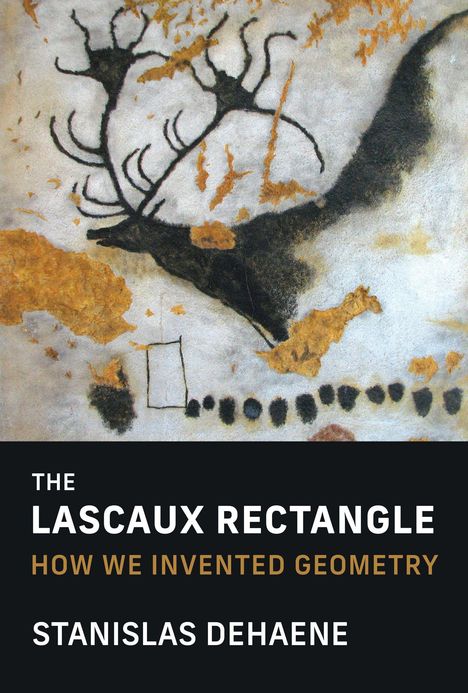

Stanislas Dehaene: The Lascaux Rectangle, Gebunden
The Lascaux Rectangle
- How We Invented Geometry
Lassen Sie sich über unseren eCourier benachrichtigen, sobald das Produkt bestellt werden kann.
- Verlag:
- MIT Press, 08/2027
- Einband:
- Gebunden
- Sprache:
- Englisch
- ISBN-13:
- 9780262057400
- Umfang:
- 296 Seiten
- Gewicht:
- 567 g
- Erscheinungstermin:
- 3.8.2027
- Hinweis
-
Achtung: Artikel ist nicht in deutscher Sprache!
Ähnliche Artikel


Klappentext
A transformative exploration of the invention of geometry---and how humans alone possess the power to imagine infinite lines, perfect circles, and mathematical truth. From the renowned neuroscientist and bestselling author of The Number Sense.
Why are humans interested in geometry while other primates are indifferent? Why do we have intuitions of infinite lines, perfect circles, or the absolute truth of the Pythagorean theorem? Drawing on two million years of prehistory, The Lascaux Rectangle reveals the answer: the uniquely human ability to compose symbols.
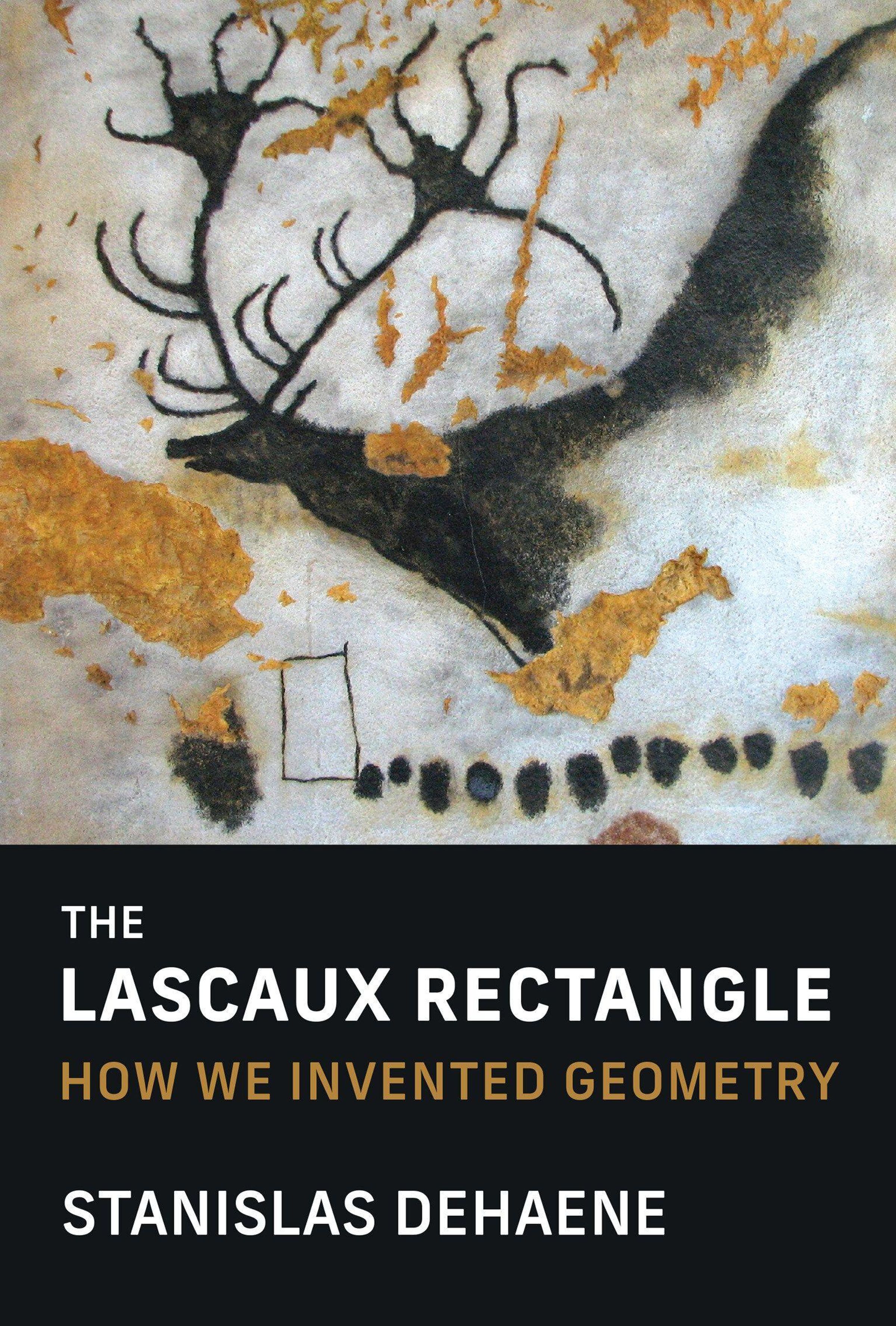
From a humble rectangle beneath a Lascaux deer or a simple zigzag engraved in a shell to the sophisticated symmetries of ancient tools, geometric symbols betray an evolutionary leap---the emergence of an inner language of thought that allows us to recombine concepts infinitely. This compositional faculty, Stanislas Dehaene argues, is more fundamental to human cognition than spoken language itself.
Weaving together evidence from prehistoric cave art, infant cognition, children's drawings, brain imaging experiments, and research across cultures---from Brazilian Amazonian communities to West African villages---Dehaene demonstrates that geometric intuition is universal, not the privilege of the educated elite.
The book reveals how the human brain became---singularly---a universal semantic machine capable of representing any meaningful fact about the universe. The Lascaux Rectangle is a profound meditation on what makes us human: not language alone, but the capability to see the infinite in the simple rectangle on a cave wall.