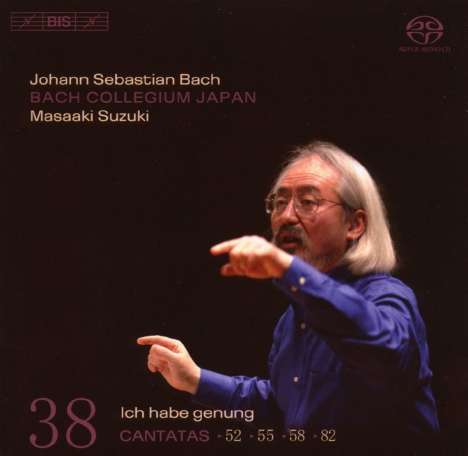

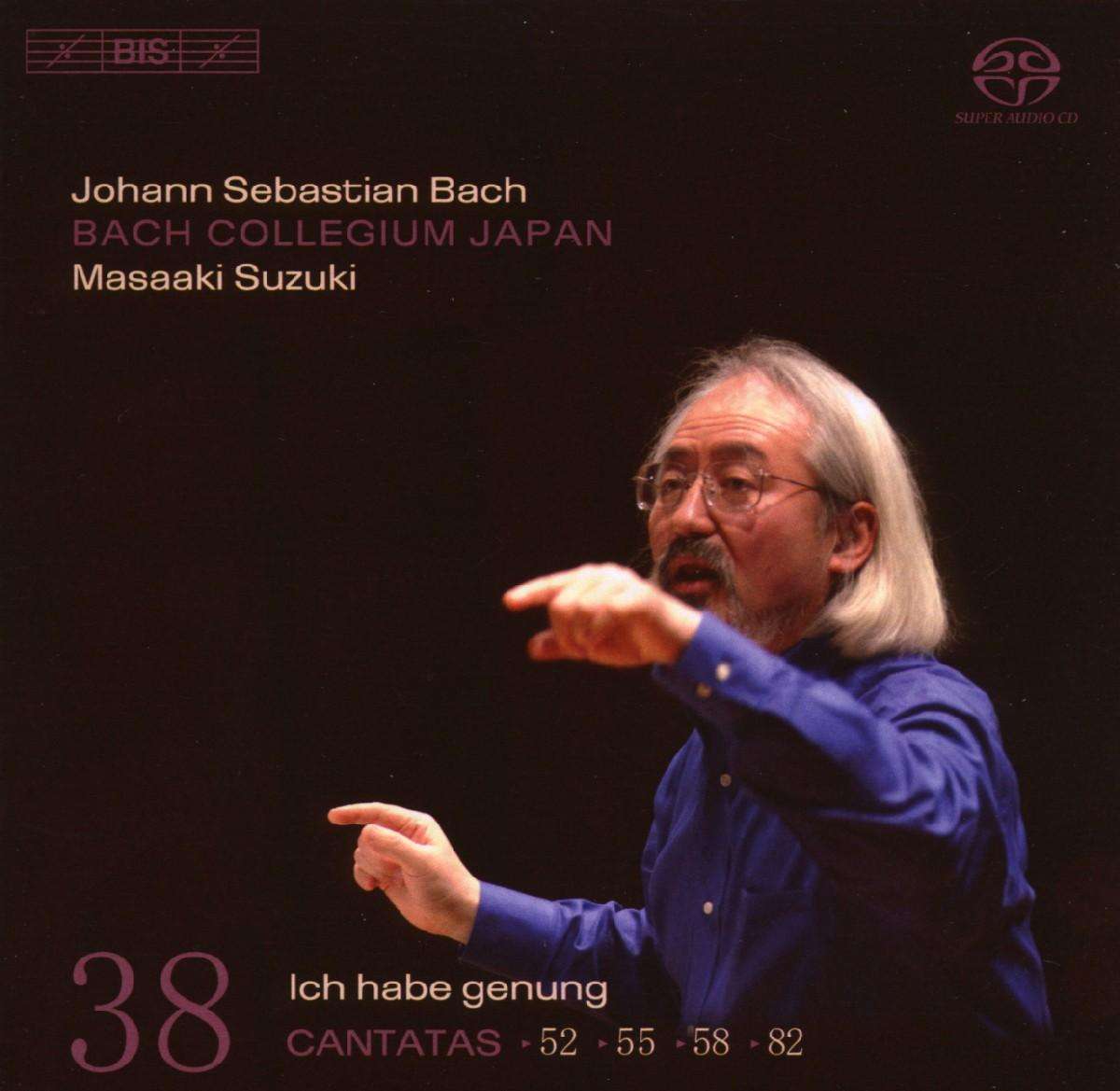
Johann Sebastian Bach: Kantaten Vol.38 (BIS-Edition) auf Super Audio CD
Kantaten Vol.38 (BIS-Edition)
Die SACD verwendet eine höhere digitale Auflösung als die Audio-CD und bietet außerdem die Möglichkeit, Mehrkanalton (Raumklang) zu speichern. Um die Musik in High-End-Qualität genießen zu können, wird ein spezieller SACD-Player benötigt. Dank Hybrid-Funktion sind die meisten in unserem Shop mit "SACD" gekennzeichneten Produkte auch auf herkömmlichen CD-Playern abspielbar. Dann allerdings unterscheidet sich der Sound nicht von einer normalen CD. Bei Abweichungen weisen wir gesondert darauf hin (Non-Hybrid).
Lassen Sie sich über unseren eCourier benachrichtigen, falls das Produkt bestellt werden kann.
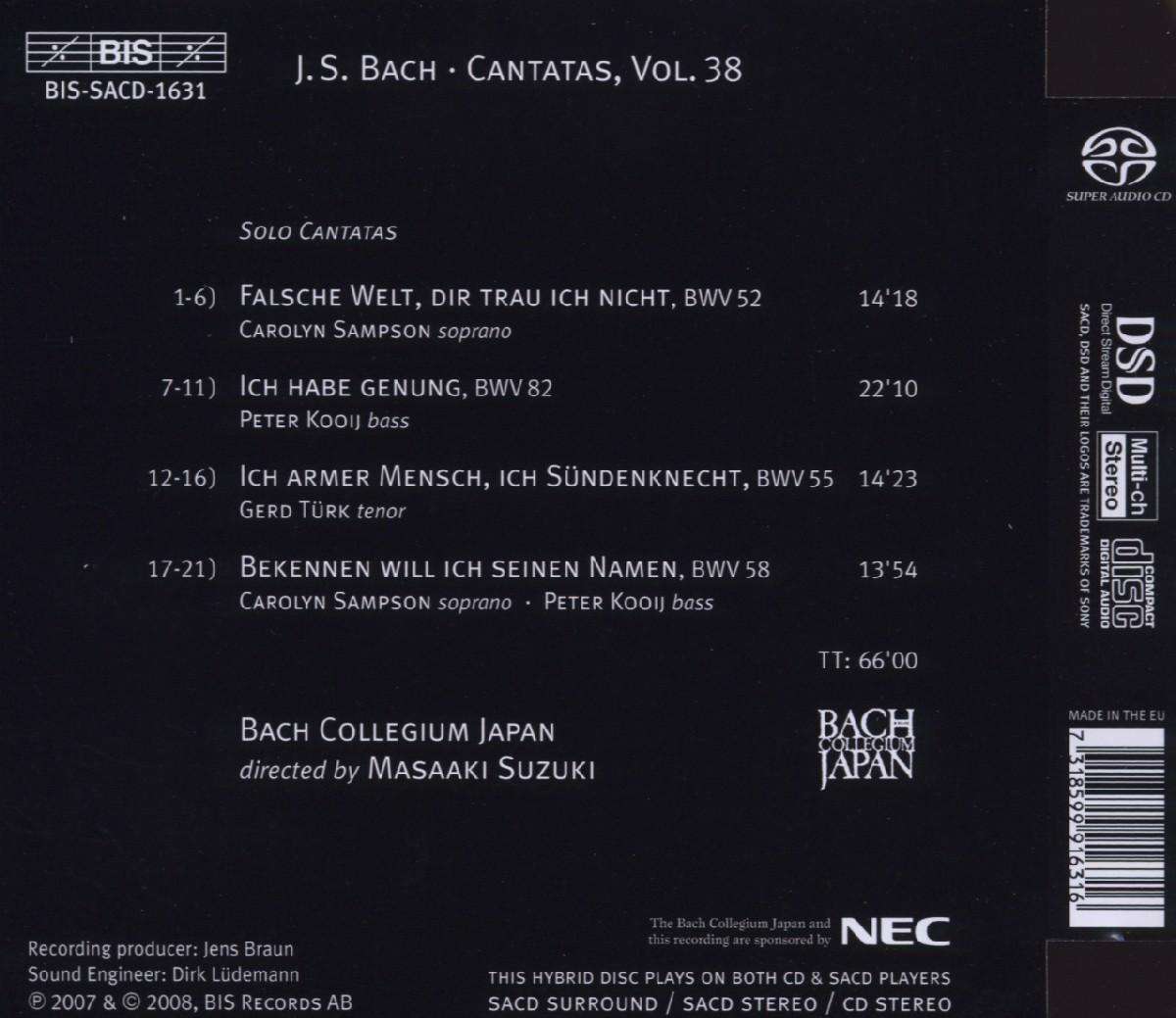
Falsche Welt, dir trau ich nicht BWV 52; Ich armer Mensch, ich Sündenknecht BWSV 55; Bekennen will ich seinen Namen BWV 58; Ich habe genug BWV 82
- Tonformat:
- stereo & multichannel (Hybrid)
- Künstler:
- Carolyn Sampson, Gerd Türk, Peter Kooij, Bach Collegium Japan, Masaaki Suzuki)
- Label:
- BIS
- Aufnahmejahr ca.:
- 2006
- UPC/EAN:
- 7318599916316
- Erscheinungstermin:
- 29.1.2008
- Serie:
- BIS Kantaten Edition
Ähnliche Artikel


The four cantatas on this recording come from 1726-1727, Bach’s fourth year of service at the Thomaskirche in Leipzig. During this time Bach showed a preference for solo cantatas, entrusting the text to a single solo voice. Three of these cantatas are of this type, while the fourth (BWV58) is scored for two voices. We can only speculate as to Bach’s reason for using this form of cantata: a shortage of choristers, perhaps, or the availability of especially gifted soloists. It’s also possible that Bach was preparing himself, and the choir, for the St Matthew Passion, planned for the Easter of 1727. Bach may also have wished to achieve greater variation in his cantata repertoire, a suggestion supported by the fact that he now more often incorporated instrumental movements. One example is the opening sinfonia of BWV 52, based on a preliminary version of the first Brandenburg Concerto. While Volume 37 in this series focussed on the solo cantatas for alto, as performed by counter-tenor Robin Blaze, this one gives equal space to three other soloists familiar to followers of the series. Ich habe genung, one of the most well-known of all Bach’s cantatas, is here performed in the original bass version by Peter Kooij, giving voice to the text’s journey from weariness of life to the joyful longing for the hereafter in the lively final movement. Carolyn Sampson interprets BWV 52, in which the falseness of the world is contrasted with the steadfastness of God, and joins Kooij in the dialogue of the duet cantata BWV58. The third soloist, Gerd Türk, performs the remaining cantata for solo tenor, Ich armer Mensch, ich Sündenknecht – a mournful recognition of man’s sinfulness and a plea for the mercy of God. The whole is accompanied by the eminent ensemble of Bach Collegium Japan, and infused by the vision of Masaaki Suzuki, as described on German website klassik. com: ‘In Suzuki's recordings the listener encounters a Bach full of élan and vitality, completely removed from any overly intellectual, protestant-puritan theoreticians, but instead opposing such an approach. Equally impressive as the architecture of Bach's music is the liveliness and impulsiveness, not to say spontaneity, which it projects.’
Rezensionen
FonoForum 08/08: "Mit gewohnt souveränem, dabei keinen einkomponierten Affekt übersehenden Spiel können die Japaner mal wieder punkten. Dies umso mehr, als sich auch die Solistenriege vorbildlich und qualitativ gleichrangig den virtuosen, aber auch emotionalen Anforderungen stellt. Gewiss hat auch Bach seinen Anteil daran, dass Suzuki hier eine der schönsten Aufnahmen seiner Reihe vorlegen kann, denn es dominiert Sanglichkeit vor kontrapunktischen Kunstfertigkeiten."Disk 1 von 1 (SACD)
Falsche Welt, dir trau ich nicht BWV 52 (Kantate)
-
1 Sinfonia
-
2 Rezitativ: Falsche Welt, dir trau ich nicht!
-
3 Arie: Immerhin, immerhin
-
4 Rezitativ: Gott ist getreu!
-
5 Arie: Ich halt es mit dem lieben Gott
-
6 Choral: In dich hab ich gehoffet, Herr
Ich habe genug BWV 82 (Kantate)
-
7 Arie: Ich habe genug
-
8 Rezitativ: Ich habe genug
-
9 Arie: Schlummert ein, ihr matten Augen
-
10 Rezitativ: Mein Gott! wenn kömmt das schöne Nun!
-
11 Arie: ich freue mich auf meinen Tod
Ich armer Mensch, ich Sündenknecht BWV 55 (Kantate)
-
12 Arei: Ich armer Mensch, ich Sündenknecht
-
13 Rezitativ: Ich habe wider Gott gehandelt
-
14 Arie: Erbarme dich
-
15 Rezitativ: Erbarme dich
-
16 Choral: Bin ich gleich von dir gewichen
Ach Gott, wie manches Herzeleid BWV 58 (Kantate)
-
17 Choral - Arie: Ach Gott, wie manches Herzeleid
-
18 Rezitativ: Verfolgt dich gleich die arge Welt
-
19 Arie: Ich bin vergnügt in meinem Leiden
-
20 Rezitativ: Kann es die Welt nicht lassen
-
21 Choral - Arie: ich hab für mir ein schwere Reis
Mehr von Johann Sebastia...
-
Johann Sebastian BachMesse h-moll BWV 2322 Super Audio CDsVorheriger Preis EUR 19,99, reduziert um 0%Aktueller Preis: EUR 14,99
-
Johann Sebastian BachDie apokryphen Werke8 CDsVorheriger Preis EUR 39,99, reduziert um 0%Aktueller Preis: EUR 29,99
-
Bach Family - Geistliche Musik der Bach-FamilieCDVorheriger Preis EUR 14,99, reduziert um 0%Aktueller Preis: EUR 7,99
-
Mitteldeutsche Hornkonzerte - Musik aus Bachs NetzwerkCDAktueller Preis: EUR 17,99